
The biggest FM hiring mistakes are reactive hiring under pressure, unrealistic all-in-one job specifications, over-reliance on CVs, slow decisions, misaligned stakeholders, weak employer branding and overlooking leadership capability. This guide explains why each one loses good candidates or produces poor appointments, and what organisations that consistently hire well do differently.
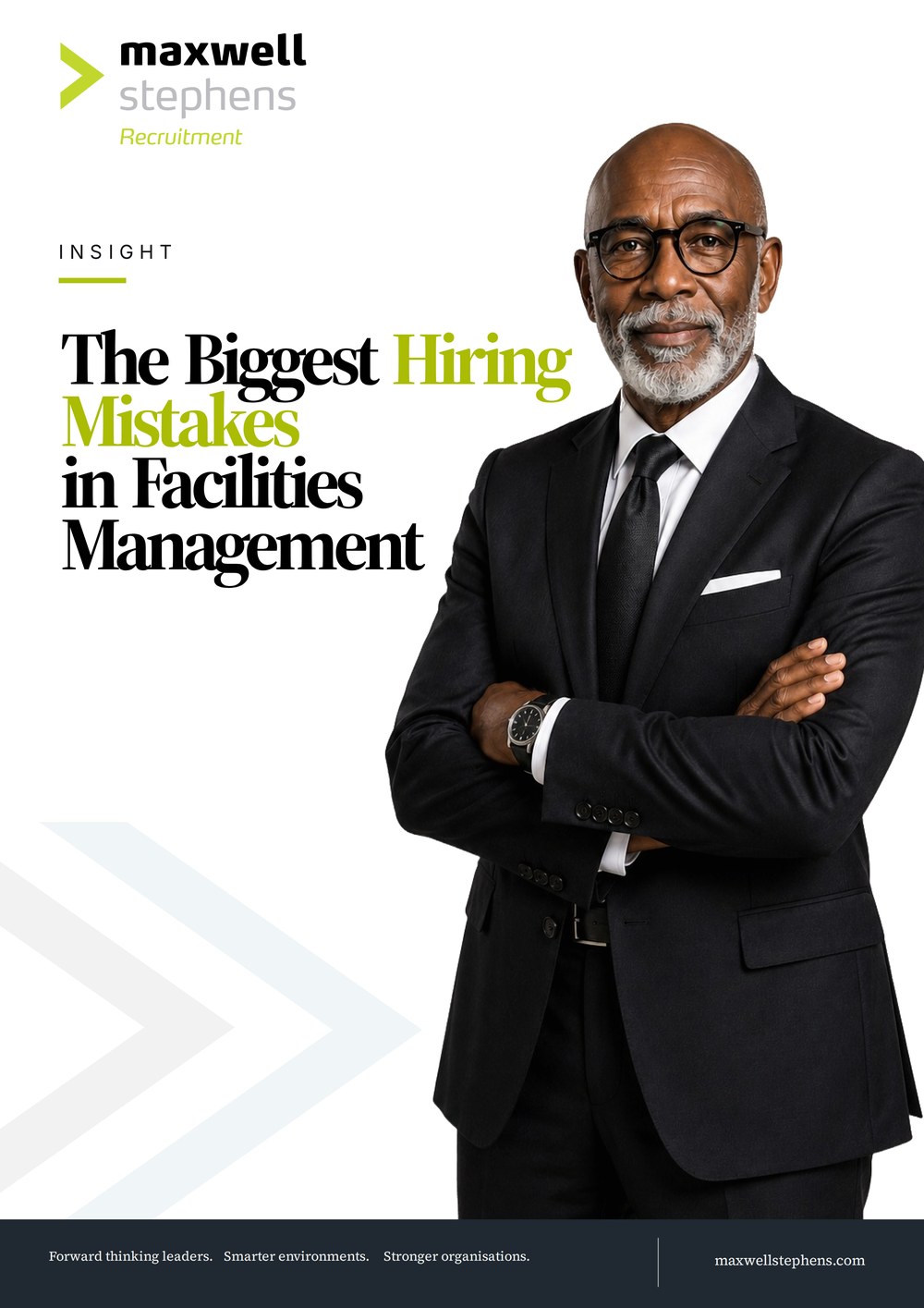
Facilities Management recruitment has become increasingly complex in recent years. Today's Facilities Managers are expected to do far more than oversee buildings, maintenance schedules, and contractor relationships. Modern FM professionals sit at the centre of workplace performance, operational resilience, compliance, sustainability, employee experience, health and safety, business continuity, and organisational strategy.
As the role continues to evolve, so too does the challenge of hiring the right people.
Yet many organisations continue to make the same recruitment mistakes: mistakes that lead to delayed hires, missed opportunities, poor candidate experiences, costly turnover, operational disruption, and long-term performance issues.
In this comprehensive guide, we explore the most common hiring mistakes organisations make when recruiting Facilities Management professionals and provide practical insight into how these challenges can be avoided.
Whether you are hiring a Facilities Manager, Senior Facilities Manager, Head of Facilities, Estates Manager, Workplace Director, or Facilities Director, understanding these pitfalls can significantly improve hiring outcomes and reduce recruitment risk.
What You'll Learn in This Guide
Successful Facilities Management recruitment requires more than posting a vacancy and reviewing CVs.
This ebook explores the key issues that frequently undermine recruitment success, including:
- Reactive hiring versus strategic workforce planning
- Creating unrealistic "unicorn" job specifications
- Over-reliance on CVs during candidate assessment
- Slow hiring processes that lose top talent
- Poor stakeholder alignment during recruitment
- Underestimating the strategic nature of Facilities Management
- Weak employer branding and candidate experience
- Hiring under pressure and lowering standards
- Using generic recruitment approaches for specialist FM roles
- Overlooking leadership capability and emotional intelligence
- Building a more effective Facilities Management hiring process
The guide combines practical recruitment insight with real-world observations from the Facilities Management sector to help organisations make more informed hiring decisions.
Why Facilities Management Recruitment Has Changed
Facilities Management is no longer viewed solely as an operational support function.
Modern Facilities Management leaders are increasingly responsible for:
- Workplace experience
- Sustainability and ESG initiatives
- Health and safety compliance
- Contractor and supplier management
- Budget control and commercial performance
- Workplace transformation projects
- Employee wellbeing
- Business continuity and operational resilience
- Strategic workplace planning
- Organisational culture and employee engagement
As a result, hiring decisions have become more important than ever.
Organisations are no longer simply recruiting building managers. They are recruiting operational leaders who influence business performance, workplace effectiveness, and long-term organisational success.
The Cost of Hiring Mistakes
Poor hiring decisions can be expensive.
Beyond recruitment fees, organisations often face:
- Increased staff turnover
- Operational disruption
- Delayed projects
- Reduced team morale
- Compliance risks
- Higher recruitment costs
- Lost productivity
- Stakeholder frustration
- Damage to employer reputation
Many of these issues can be traced back to mistakes made at the very beginning of the recruitment process.
This guide explains how organisations can avoid these challenges by taking a more strategic and structured approach to Facilities Management hiring.
Reactive Hiring: One of the Most Common FM Recruitment Mistakes
One of the biggest recruitment challenges explored in this guide is reactive hiring.
Many organisations only begin recruiting when:
- A key employee resigns
- Operational problems escalate
- Teams become overstretched
- Projects begin slipping behind schedule
- Compliance concerns emerge
- Workplace performance starts to decline
At this stage, organisations are often hiring under pressure rather than from a position of clarity.
The guide explains why proactive workforce planning consistently produces stronger hiring outcomes than last-minute recruitment decisions and how employers can improve succession planning to reduce recruitment risk.
The Problem with "Unicorn" Job Descriptions
Many Facilities Management job specifications attempt to combine multiple specialist disciplines into one role.
Employers often seek candidates with expertise in:
- Operational leadership
- Technical building services
- Health and safety
- Sustainability and ESG
- Workplace transformation
- Project management
- Procurement
- Contract management
- Compliance
- Strategic planning
While these requirements may sound attractive on paper, unrealistic expectations can dramatically reduce the available talent pool and make recruitment significantly more difficult.
The guide explains why role clarity is essential and how employers can build more realistic and attractive Facilities Management job specifications.
Why CVs Don't Tell the Whole Story
A strong CV can be helpful, but it does not always predict workplace success.
Facilities Management has become a leadership profession as much as a technical discipline.
The strongest FM professionals often demonstrate qualities that cannot be fully captured on paper, including:
- Leadership maturity
- Emotional intelligence
- Communication skills
- Stakeholder management
- Decision-making under pressure
- Adaptability
- Commercial judgement
- Team leadership capability
This ebook explores how organisations can improve interview processes and candidate assessments to identify the characteristics that genuinely drive long-term success.
Speed Matters in Facilities Management Recruitment
The best Facilities Management candidates rarely remain available for long.
In today's competitive market, many experienced professionals are engaged in multiple recruitment processes simultaneously.
The guide examines how delayed decision-making can lead to:
- Candidate drop-off
- Lost offers
- Reduced engagement
- Negative candidate experiences
- Strong candidates accepting competing opportunities
It also outlines how organisations can improve recruitment speed without sacrificing hiring quality.
Facilities Management Is No Longer Just Operational
One of the most important themes explored throughout this guide is the evolution of Facilities Management itself.
Modern Facilities Managers increasingly influence:
- Workplace strategy
- Employee wellbeing
- Sustainability objectives
- Hybrid working environments
- Organisational culture
- Business resilience
- Senior leadership decision-making
Organisations that continue to view Facilities Management purely as a maintenance function often struggle to attract the strongest candidates.
This guide explains why understanding the strategic value of Facilities Management has become a crucial part of successful recruitment.
Employer Brand Is Becoming a Competitive Advantage
Facilities Management professionals are increasingly selective about where they choose to work.
Candidates now evaluate organisations based on:
- Leadership quality
- Workplace culture
- Career progression opportunities
- Flexibility
- Communication standards
- Organisational stability
- Employer reputation
The guide explores why employer branding and candidate experience are becoming major differentiators in Facilities Management recruitment and how organisations can strengthen their position in an increasingly competitive market.
The Growing Importance of Leadership Capability
Technical competence remains essential, but modern Facilities Management recruitment increasingly requires employers to assess leadership potential.
Exceptional Facilities Managers often excel at:
- Leading teams through change
- Managing complex stakeholder relationships
- Communicating effectively across organisations
- Maintaining operational stability during periods of pressure
- Creating trust and confidence
- Balancing commercial objectives with operational requirements
The ebook explains why leadership capability frequently separates good Facilities Managers from exceptional ones and how employers can better assess these qualities during recruitment.
What Strong Facilities Management Hiring Looks Like
The guide concludes by examining the characteristics shared by organisations that consistently recruit high-performing Facilities Management professionals.
These include:
- Clear role definition
- Realistic expectations
- Efficient decision-making
- Internal stakeholder alignment
- Strong communication
- Professional candidate experiences
- Long-term thinking
- Strategic workforce planning
Organisations that adopt these principles typically attract stronger candidates, reduce recruitment risk, improve retention, and build more resilient Facilities Management functions.
What the data says
What the evidence says about common hiring errors, from unstructured interviews to early resignations, and why they matter in FM appointments.
- Unstructured interviews predict job performance far less well: a mean operational validity of .19, versus .42 for structured interviews. Source: Sackett et al., Industrial and Organizational Psychology, 2023
- 85% of UK HR decision-makers admit their organisation has made a bad hire; a third believe these mistakes cost nothing. Source: Recruitment & Employment Confederation (REC), Hiring mistakes are costing UK businesses billions each year, 2017
- 41% of UK organisations that selected candidates in the past year said new recruits always, mostly or sometimes resigned within their first 12 weeks. Source: CIPD, Resourcing and talent planning report 2024
- 90% of UK organisations use some form of selection interview; 52% use competency-based interviews. Source: CIPD, Resourcing and talent planning report 2024
- 95% of candidates placed by Maxwell Stephens remain in role one year after appointment. Source: Maxwell Stephens, 2026
See it in practice
Head of Facilities & Operations Recruitment for Sotheby's Institute of Art
Following a number of unsuccessful recruitment campaigns through several agencies, Sotheby's Institute of Art appointed Maxwell Stephens exclusively to recruit a Head of Facilities & Operations for its Georgian campus on Bedford Square. Working with the Institute's leadership team, we developed a detailed profile of the ideal candidate and ran a targeted executive search. All four shortlisted candidates progressed to interview, and one was appointed. It shows how a detailed candidate profile and one accountable search can break a cycle of failed recruitment campaigns.
Read the full case study or browse all case studies.
Related reading
- 5 Recruiting Red Flags to Watch for When Hiring
- How to Hire a Facilities Manager: A Complete Employer Guide
- 5 Steps to Shortlisting the Right Candidate
Practical guides
Free Maxwell Stephens guides on the same subject:
- Recruiting a Facilities Manager: 10 Things You Need to Know
- 101 Questions to Ask in a Facilities Management Interview
Who Should Download This Guide?
This resource is ideal for:
- Facilities Directors
- Heads of Facilities
- Facilities Managers
- Estates Directors
- Estates Managers
- Workplace Leaders
- HR Professionals
- Talent Acquisition Teams
- Operations Directors
- Business Leaders
- Senior Management Teams
Whether you are hiring your first Facilities Manager or building a large multi-site Facilities Management function, this guide provides practical insight into avoiding common recruitment mistakes, improving hiring decisions, and attracting the high-performing Facilities Management professionals your organisation needs to succeed.
Download your free copy today and discover how to avoid the most common Facilities Management recruitment mistakes while building stronger, more resilient operational leadership teams.
Talk to Maxwell Stephens
Maxwell Stephens is a specialist Facilities Management recruitment consultancy. If you are planning an FM, estates or workplace appointment, contact us for a confidential conversation, or read our case studies to see how comparable searches were run.