
Boards should treat Facilities Management as a strategic function because it now shapes resilience, business continuity, workplace performance, ESG outcomes, risk and talent retention, not just buildings and compliance. This guide explains why FM belongs in the boardroom, how technology and hybrid working are changing it, and the commercial and leadership skills modern FM leaders need.
Facilities Management has undergone a profound transformation over the past decade.
Once viewed primarily as an operational function responsible for buildings, maintenance, compliance, and workplace services, Facilities Management is now increasingly recognised as a strategic business discipline that directly influences organisational resilience, employee experience, workplace performance, operational continuity, ESG outcomes, and long-term commercial success.
As organisations face growing complexity, evolving workplace expectations, technology disruption, sustainability pressures, and increasing demands for operational resilience, Facilities Management has moved closer to the centre of executive decision-making than ever before.
This comprehensive guide explores why Facilities Management is becoming a boardroom priority and how forward-thinking organisations are leveraging FM as a strategic asset rather than simply a support function.
What You'll Learn in This Guide
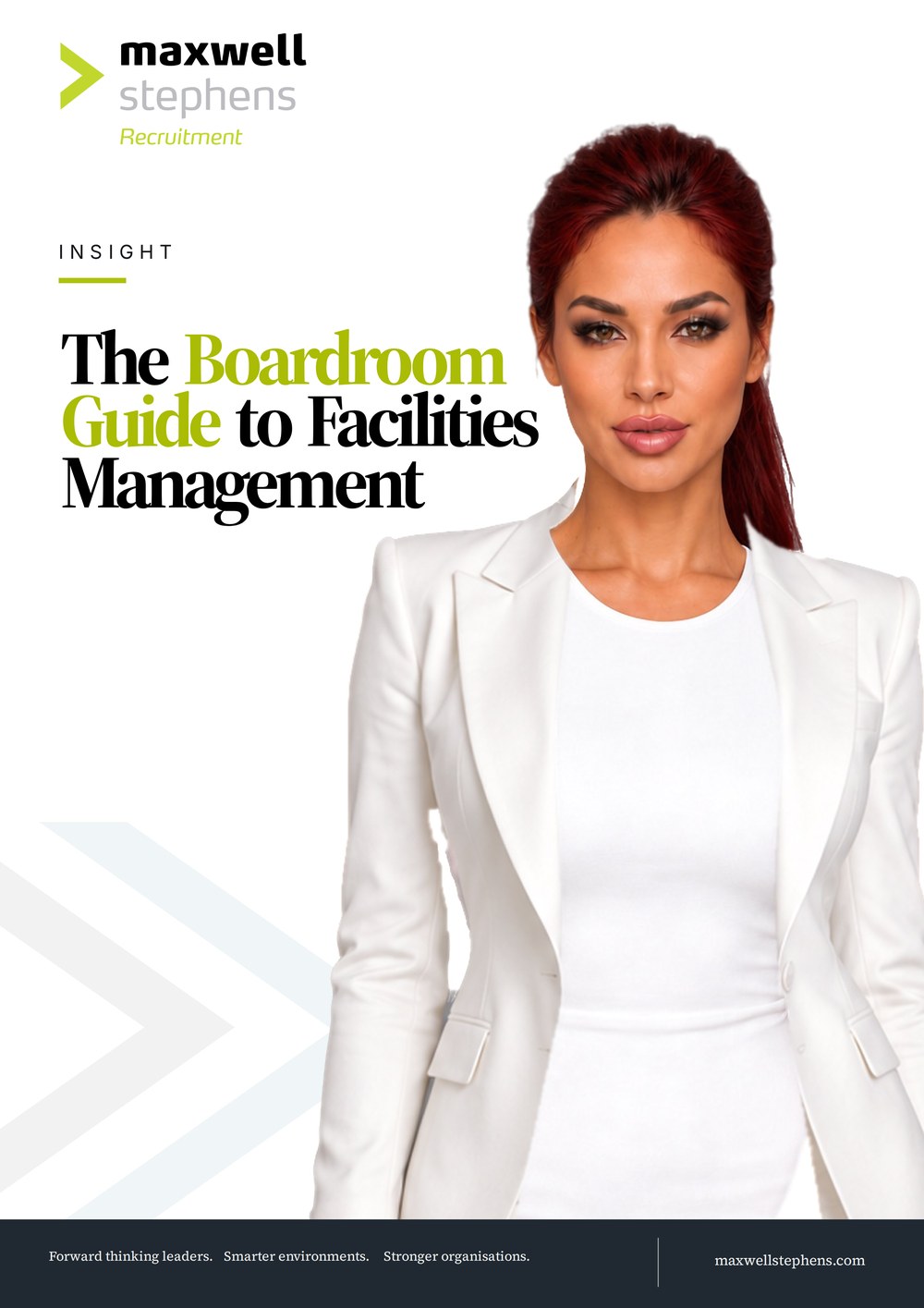
The Boardroom Guide to Facilities Management examines the growing influence of Facilities Management across every aspect of modern organisational performance.
Inside, you'll discover:
- Why Facilities Management is increasingly viewed as strategic infrastructure
- How FM supports organisational stability and business continuity
- The relationship between workplace quality and business performance
- Why workplace experience has become a competitive advantage
- The growing role of FM in ESG and sustainability strategies
- How Facilities Management helps organisations manage risk
- Why operational resilience is now a board-level concern
- The impact of technology, data, AI, and smart buildings on FM leadership
- How Facilities Management influences organisational culture
- Why FM is becoming critical to talent attraction and retention
- The commercial and leadership skills modern FM professionals require
- How the future of Facilities Management will continue to evolve
Designed for board members, executive leaders, HR professionals, operational leaders, Facilities Directors, Heads of Facilities, Workplace Leaders, and business decision-makers, this guide provides a practical overview of why Facilities Management has become one of the most strategically important functions within modern organisations.
Facilities Management Is No Longer Just About Buildings
One of the central themes explored throughout this guide is the evolution of Facilities Management from operational oversight to strategic business enablement.
Historically, FM was often associated with:
- Building maintenance
- Compliance
- Workplace operations
- Contractor management
- Health and safety
While these responsibilities remain essential, today's Facilities Management professionals influence a much broader range of business outcomes.
Modern FM leaders increasingly contribute to:
- Organisational resilience
- Employee experience
- Workplace productivity
- ESG performance
- Risk management
- Business continuity
- Organisational culture
- Workplace transformation
- Operational stability
The strongest organisations now view Facilities Management as strategic infrastructure that enables business performance rather than simply supporting it.
Facilities Management Supports Organisational Stability
Every successful organisation relies on stability.
Without effective operational environments, productivity declines, risks increase, employee confidence weakens, and business continuity becomes vulnerable.
Facilities Management sits at the centre of this stability, supporting:
- People
- Infrastructure
- Technology
- Workplace functionality
- Operational processes
- Health and safety
When Facilities Management performs effectively, organisations often operate seamlessly. When it fails, operational disruption becomes highly visible and can impact multiple areas of the business.
The guide explains why strong Facilities Management leadership has become a critical component of organisational resilience and operational effectiveness.
Workplace Performance Is Directly Linked to Facilities Management
The workplace environment has a measurable impact on organisational performance.
Modern workplaces influence:
- Productivity
- Engagement
- Collaboration
- Wellbeing
- Employee experience
Poor workplace environments often create frustration, disengagement, operational friction, and reduced morale.
Conversely, well-designed and effectively managed workplaces improve focus, energy, collaboration, and organisational connection.
As a result, Facilities Management increasingly shapes outcomes that were once considered the responsibility of multiple departments. The workplace itself has become a strategic performance driver.
Workplace Experience Has Become a Competitive Advantage
Hybrid working has fundamentally changed employee expectations.
Employees increasingly evaluate organisations based on:
- Workplace quality
- Flexibility
- Comfort
- Amenities
- Overall workplace experience
The office is no longer simply a place employees attend because they are required to.
Modern workplaces must actively encourage collaboration, reinforce culture, support wellbeing, and provide meaningful experiences that justify attendance and engagement.
Facilities Management now plays a central role in delivering these outcomes.
This guide explores how workplace experience is becoming an important differentiator for employers seeking to attract, engage, and retain high-performing talent.
ESG and Sustainability Are Boardroom Priorities
Environmental, Social and Governance (ESG) objectives have become a major focus for organisations across every sector.
Facilities Management is increasingly responsible for delivering many of these goals through:
- Energy management
- Sustainability initiatives
- Environmental efficiency
- Workplace wellbeing
- Operational governance
Modern FM leaders increasingly contribute to carbon reduction programmes, sustainability reporting, energy optimisation, and responsible workplace operations.
The guide explores why Facilities Management now plays a vital role in helping organisations achieve ESG objectives while supporting operational performance and long-term business goals.
Facilities Management Is a Critical Risk Management Function
Risk management has become one of the most important responsibilities within modern organisations.
Facilities Management plays a significant role in reducing exposure to:
- Operational disruption
- Compliance failures
- Workplace safety incidents
- Security risks
- Infrastructure failures
- Reputational damage
Strong FM leadership strengthens resilience and reduces organisational vulnerability.
The guide explains why Facilities Management increasingly forms part of board-level conversations around governance, risk, business continuity, and operational protection.
Technology Is Transforming Facilities Management
Technology is reshaping the Facilities Management profession at an unprecedented pace.
Advancements in:
- Smart buildings
- Workplace analytics
- Automation
- Artificial intelligence
- Predictive maintenance
- Data-driven decision making
are helping organisations move beyond reactive facilities operations toward more proactive and strategic workplace management.
The guide explores how FM leaders are increasingly expected to combine operational expertise with technological understanding, commercial awareness, and data-driven decision-making capability.
Facilities Management Influences Organisational Culture
The physical workplace plays a major role in shaping how organisations feel.
Facilities Management directly influences:
- Workplace atmosphere
- Comfort
- Collaboration
- Wellbeing
- Daily employee experience
As a result, FM increasingly impacts organisational culture, employee engagement, and workplace identity.
Modern workplaces communicate organisational values every day through their environment, design, functionality, and employee experience.
This guide examines why Facilities Management is becoming an important contributor to culture and employee connection.
Facilities Management Is Becoming More Commercial
One of the most significant changes highlighted throughout this guide is the growing commercial importance of Facilities Management leadership.
Modern FM leaders increasingly require:
- Strategic thinking
- Commercial awareness
- Executive communication skills
- Financial understanding
- Stakeholder management capability
- Leadership credibility
The strongest Facilities Management professionals understand organisational priorities, financial pressures, business risk, and executive expectations.
Facilities Management is becoming increasingly integrated into broader business strategy and organisational decision-making.
Why Facilities Management Belongs in the Boardroom
Historically, Facilities Management was often evaluated primarily through cost control and operational efficiency.
While these metrics remain important, the value delivered by modern FM extends much further.
Today's Facilities Management functions contribute to:
- Resilience
- Engagement
- Workplace performance
- Talent retention
- ESG objectives
- Organisational stability
- Operational continuity
- Business performance
The organisations that recognise this shift are increasingly positioning Facilities Management as a strategic board-level function capable of delivering measurable long-term value.
What the data says
What boards need to know: FM's economic scale, board-level cyber accountability, the cost of workplace harm and buildings' rising share of emissions.
- The UK workplace and facilities management sector is worth £102bn and 1.2 million jobs to the UK economy. Source: IWFM, Market Outlook 2025
- Just 27% of UK businesses have board members taking explicit responsibility for cyber security. Source: GOV.UK (DSIT / Home Office), Cyber security breaches survey 2025
- Workplace injuries and ill health from current working conditions cost Great Britain an estimated £22.9 billion in 2023/24. Source: Health and Safety Executive, Key figures for Great Britain 2024 to 2025, 2026
- By the mid-2030s, buildings are predicted to become the UK's highest-emitting sector in the Government's trajectory. Source: UK Green Building Council, CCC Progress Report 2026: Buildings are now the UK's biggest climate test
- 16% of the FM vacancies Maxwell Stephens advertised from 2023 to 2026 were Head of or Director-level leadership roles. Source: Maxwell Stephens analysis of 497 advertised vacancies, May 2023 to September 2026
See it in practice
Group Property Director Recruitment for Rank Group plc
Rank Group plc appointed Maxwell Stephens to recruit a Group Property Director to lead its portfolio of venues and corporate offices across the UK and Spain. We searched for leaders with the commercial perspective to influence property strategy at Group level, assessing experience of acquisitions and disposals, major developments, FM, financial control and senior stakeholder engagement, alongside the ability to combine strategic thinking with practical delivery. It shows property and FM leadership operating at Group level, where estate decisions shape business strategy.
Read the full case study or browse all case studies.
Related reading
- Measuring the ROI of Facilities Management
- The Home Office’s New FM Model: Outsource Capability Now, Build Resilience for the Future
- Using Balanced Scorecards to Manage Facilities Management Suppliers
Practical guides
Free Maxwell Stephens guides on the same subject:
Who Should Download This Guide?
This resource is ideal for:
- Board Directors
- Chief Operating Officers
- Managing Directors
- HR Directors
- People Leaders
- Facilities Directors
- Heads of Facilities
- Workplace Directors
- Estates Directors
- Property Leaders
- Operations Directors
- Senior Facilities Management Professionals
Whether you are responsible for workplace strategy, operational performance, organisational resilience, employee experience, or Facilities Management leadership, this guide provides valuable insight into why Facilities Management is becoming one of the most influential business functions within modern organisations.
Download your free copy today and discover why the future of business performance, resilience, workplace experience, and organisational success increasingly depends on strategic Facilities Management leadership.
Talk to Maxwell Stephens
Maxwell Stephens is a specialist Facilities Management recruitment consultancy. If you are planning an FM, estates or workplace appointment, contact us for a confidential conversation, or read our case studies to see how comparable searches were run.
Useful links