
Modern FM leaders need more than technical expertise: they need strategic thinking, clear communication, emotional intelligence, commercial awareness, adaptability and influence. This guide covers moving from manager to leader, aligning FM with business strategy, building trust, leading change and deciding under pressure, and concludes that the strongest leaders balance people, process, technology and strategy.
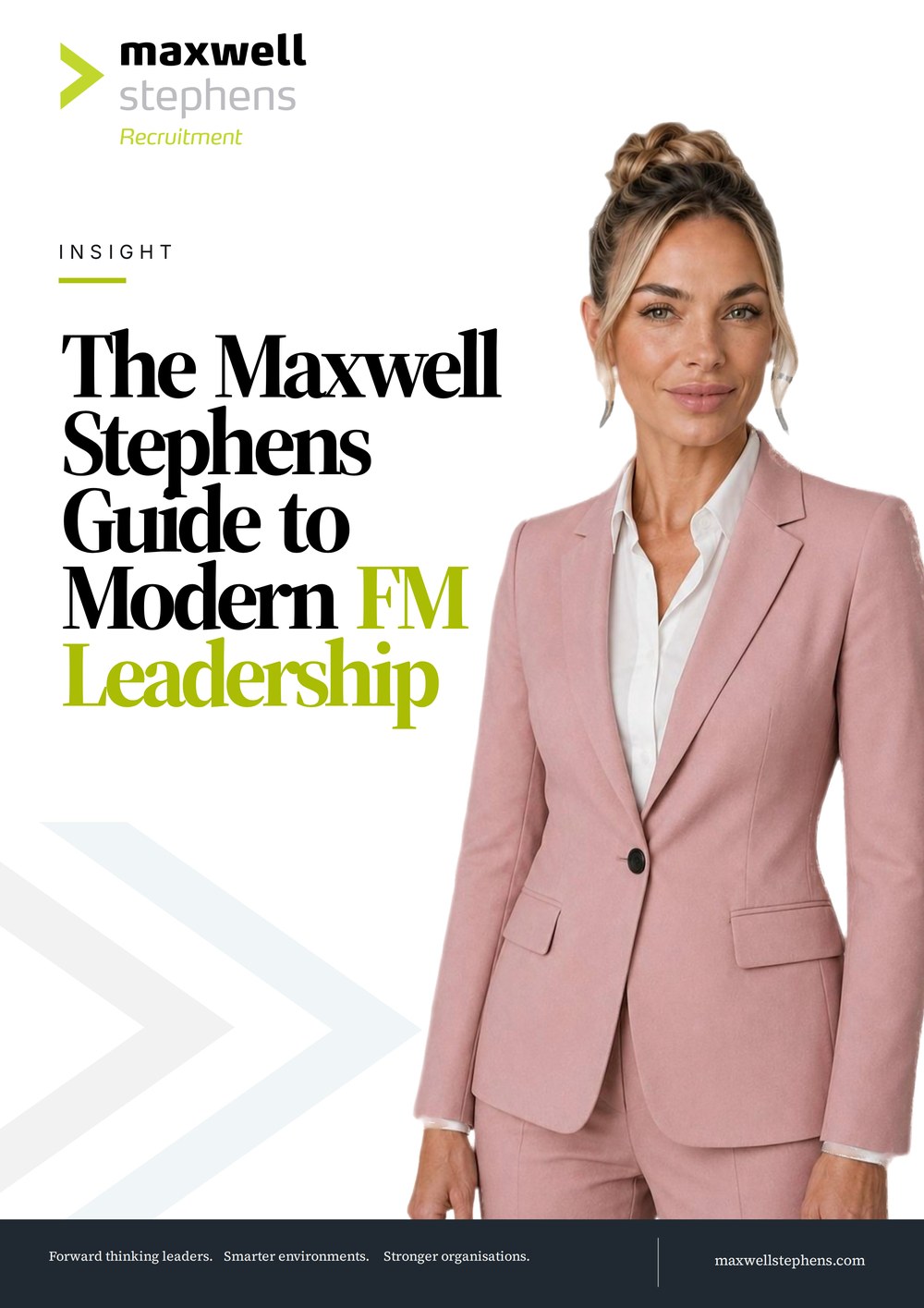
Facilities Management has evolved far beyond the day-to-day oversight of buildings. Today’s FM leaders help shape workplace experience, organisational performance, employee wellbeing, sustainability, resilience, technology adoption and business continuity.
The Maxwell Stephens Guide to Modern FM Leadership explores the skills and behaviours professionals need to meet these wider expectations. It examines the transition from manager to leader and explains why technical expertise must now be supported by strategic thinking, clear communication, emotional intelligence, commercial awareness, adaptability and influence.
Across the guide, readers will explore how to align Facilities Management with business strategy, build trust and credibility, lead teams through change, make confident decisions under pressure and create high-performing cultures. It also considers the FM leader’s growing role in sustainability, smart-building technology, workplace experience and long-term continuity planning.
Designed for current and aspiring Facilities Managers, Heads of Facilities, FM Directors, workplace leaders and estates professionals, this guide provides a clear overview of what effective leadership looks like in a changing profession. Download it to identify the capabilities that will help you lead people, improve performance and create environments in which organisations can succeed.
The guide itself concludes that the strongest FM leaders balance people, process, technology and strategy, while understanding both buildings and the people who use them.
What the data says
The data behind modern FM leadership: management training gaps, efforts to improve management quality, employee engagement and use of data.
- 82% of UK managers who enter management positions have had no formal management and leadership training. Source: Chartered Management Institute, Better Management Report: Take Responsibility, Take Action, 2023
- Almost nine in ten (89%) UK firms surveyed in 2023 reported taking some action to improve management quality. Source: Office for National Statistics, Management practices in the UK: 2016 to 2023, 2024
- Only 10% of UK employees are engaged at work. Source: Gallup, State of the Global Workplace: United Kingdom Country-Level Data, 2026
- 86% of UK businesses handle digitised data, but only 25% of those analyse it to generate new insights or knowledge. Source: Department for Science, Innovation and Technology (GOV.UK), UK Business Data Survey 2026
- For 35 Head of Facilities, Estates and similar roles Maxwell Stephens advertised from 2023 to 2026, the median top-of-range salary was £70,000. Source: Maxwell Stephens analysis of 497 advertised vacancies, May 2023 to September 2026
See it in practice
Head of Facilities Recruitment for Global
Global, home to brands including Heart, Capital, Classic FM and LBC, partnered exclusively with Maxwell Stephens to recruit a Head of Facilities for its London headquarters. After in-depth consultation, we presented a shortlist of five within one week; three were interviewed. The appointee brought a modern, people-focused approach, introduced new workplace technologies and processes, and led and developed a high-performing facilities team. It reflects modern FM leadership: people-focused, technology-aware and aligned with business objectives.
Read the full case study or browse all case studies.
Related reading
- What Does Strong FM Leadership Look Like?
- Confidence Without Complacency: Leading with Credibility in FM
- The Power of 10: Why Great Leaders Must Zoom In and Zoom Out
Practical guides
Free Maxwell Stephens guides on the same subject:
Who this resource is for
Current and aspiring Facilities Managers, Heads of Facilities, FM Directors, workplace leaders, estates professionals and organisations seeking to develop stronger FM leadership capability.
Talk to Maxwell Stephens
Maxwell Stephens is a specialist Facilities Management recruitment consultancy. If you are planning an FM, estates or workplace appointment, contact us for a confidential conversation, or read our case studies to see how comparable searches were run.