
Workplace psychology is the study of how physical environments affect behaviour, wellbeing and performance, and Facilities Management shapes most of those conditions. This guide explains how layout, lighting, noise, air quality and the mix of private, open and breakout spaces influence focus, collaboration, wellbeing and psychological safety, and how FM can use this to create better workplaces.
Facilities Management has traditionally focused on buildings, maintenance, compliance and operational efficiency. These responsibilities remain essential, but modern workplaces do far more than support activity: they influence how people think, feel, behave, collaborate and perform.
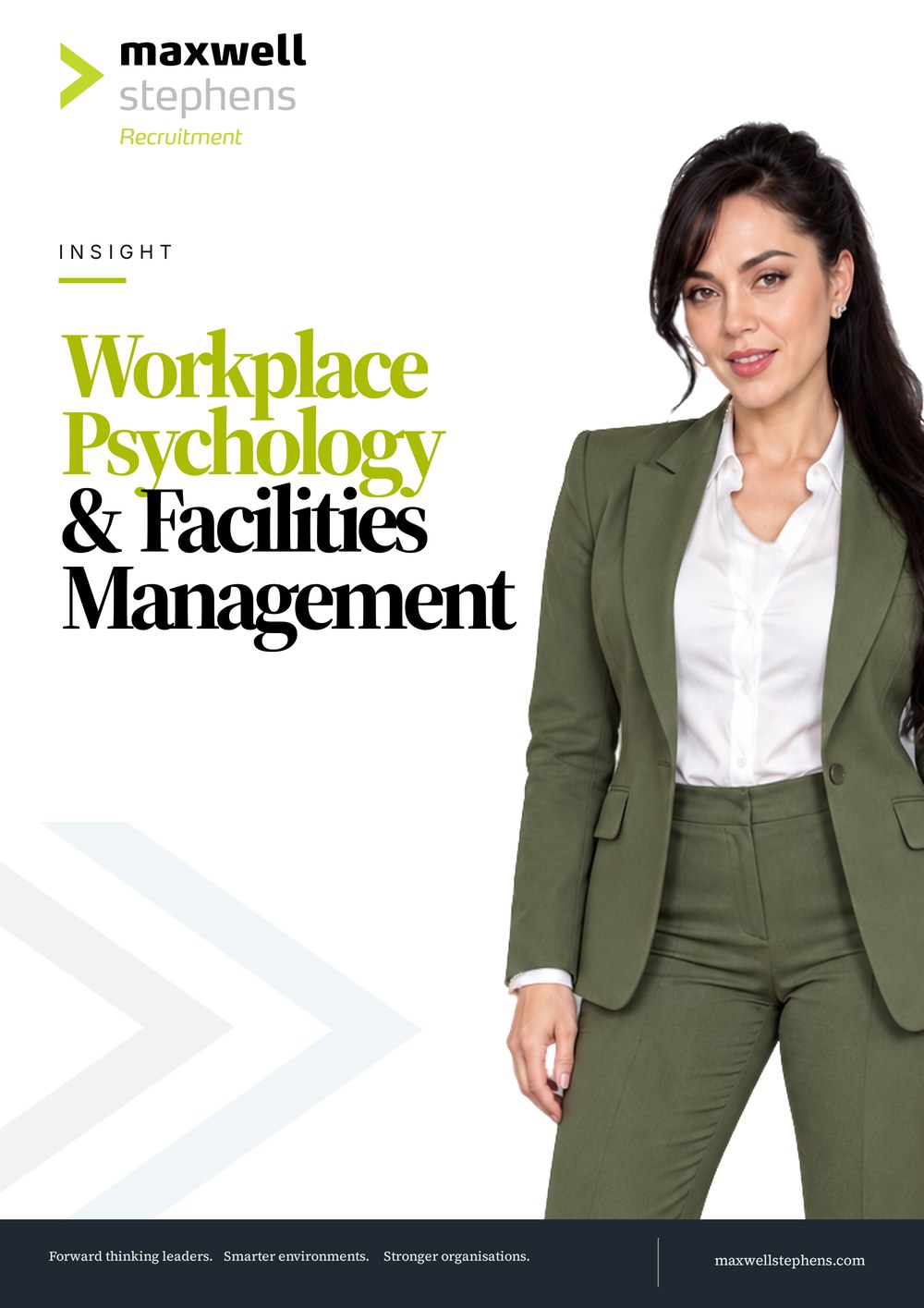
Workplace Psychology & Facilities Management explores how physical environments affect human experience and how Facilities Management can use this understanding to create better workplaces. The guide explains that layout, lighting, noise, air quality, meeting spaces and breakout areas all send behavioural signals and shape the way employees work.
What workplace psychology means
Readers are introduced to workplace psychology as the study of how physical environments influence behaviour, emotions, wellbeing and performance. The guide considers why some spaces improve concentration, encourage collaboration or increase engagement, while others create stress, distraction and fatigue.
It also presents the workplace as a behavioural system rather than simply a collection of physical assets. Open areas can encourage interaction and visibility, private spaces support concentrated work, informal areas promote spontaneous collaboration, and breakout spaces provide opportunities for creativity and recovery.
Focus and productivity
A dedicated section examines focus and productivity. Noise, interruptions, visual distractions, overcrowding and poor space planning can reduce concentration, while acoustic design, environmental comfort, workspace variety and access to privacy can help employees perform higher-quality work.
Collaboration and connection
The guide also explores collaboration and connection, showing how informal meeting spaces, flexible work areas, shared social zones and collaboration technology can improve knowledge-sharing and reduce organisational silos. As hybrid working becomes more established, these shared experiences are becoming an increasingly important reason for employees to attend the workplace.
Wellbeing, emotional experience and psychological safety
Further chapters cover employee wellbeing, emotional experience, psychological safety and organisational culture. Air quality, natural light, ergonomics, biophilic design and recovery spaces can support wellbeing, while colour, lighting, space density, cleanliness and design quality influence mood, confidence and perceptions of professionalism.
The guide also explains how physical environments can contribute to psychological safety. Private spaces can support sensitive conversations, accessible collaboration areas can encourage participation, and visible leadership spaces may reduce organisational barriers.
What the data says
The evidence on workplace psychology: work-related stress, mental health, long-term absence and whether workplaces support focused work.
- Stress, depression or anxiety accounted for 52% of all work-related ill health and 62% of working days lost to it in Great Britain in 2024/25. Source: Health and Safety Executive, Work-related stress, depression or anxiety statistics in Great Britain, 2025
- 25% of UK employees say their work has a negative or very negative impact on their mental health. Source: CIPD Good Work Index 2025
- Mental ill health is the top cause of long-term absence, cited among the top three causes by 41% of UK organisations. Source: CIPD (supported by Simplyhealth), Health and wellbeing at work 2025
- Individual focused desk-based work matters to 89% of employees, yet only 27% of corporate real estate leaders cite 'enabling productivity' as a reason for the workplace. Source: Leesman, The workplace why, 2025
- Maxwell Stephens has specialised in Facilities Management, estates and workplace recruitment since 2006. Source: Maxwell Stephens, 2026
See it in practice
Supporting a High-Performance Workplace Environment at Activision Blizzard
Activision Blizzard asked Maxwell Stephens to recruit an Office & Facilities Supervisor/Manager for its London studio, where workplace services are expected to support innovation and collaboration. Because facilities expertise alone would not be enough, we assessed candidates for interpersonal skills, leadership and a customer-focused approach. The appointee took ownership of workplace services, keeping facilities, support services and employee-facing functions running smoothly. It shows FM shaping an environment that supports creativity, collaboration and the people working in it.
Read the full case study or browse all case studies.
Related reading
- The Rising Cost of Workplace Stress and What Employers Should Be Doing About It
- How to Promote Healthy Habits in the Workplace
- Workplace Loneliness: How Employers Can Build Stronger Connections
Practical guides
Free Maxwell Stephens guides on the same subject:
- Generational Differences, Attitudes and Motivations in the Workplace
- 101 Things a Facilities Manager Should Know
Who this resource is for
Facilities Managers, Heads of Facilities, FM Directors, workplace and estates leaders, HR and people teams, organisational leaders, property professionals and organisations seeking to improve workplace performance, wellbeing, engagement and employee experience.
Designed for FM, workplace, property, HR and organisational leaders, this resource provides a practical introduction to creating environments that support human needs and organisational goals.
Talk to Maxwell Stephens
Maxwell Stephens is a specialist Facilities Management recruitment consultancy. If you are planning an FM, estates or workplace appointment, contact us for a confidential conversation, or read our case studies to see how comparable searches were run.