
Modern FM leadership combines management of process and control with leadership through direction, judgement, influence and trust. This guide brings together the behaviours that matter most: staying calm under pressure, deciding quickly without being impulsive, influencing without hierarchy, communicating consistently, using emotional intelligence and leading through uncertainty, alongside workplace strategy, sustainability and self-development.
Facilities Management leadership has evolved significantly. While managing buildings, contractors, maintenance and operational issues remains important, modern FM leaders are increasingly expected to influence business strategy, manage complexity, protect continuity, shape workplace experience and operate as trusted organisational leaders.
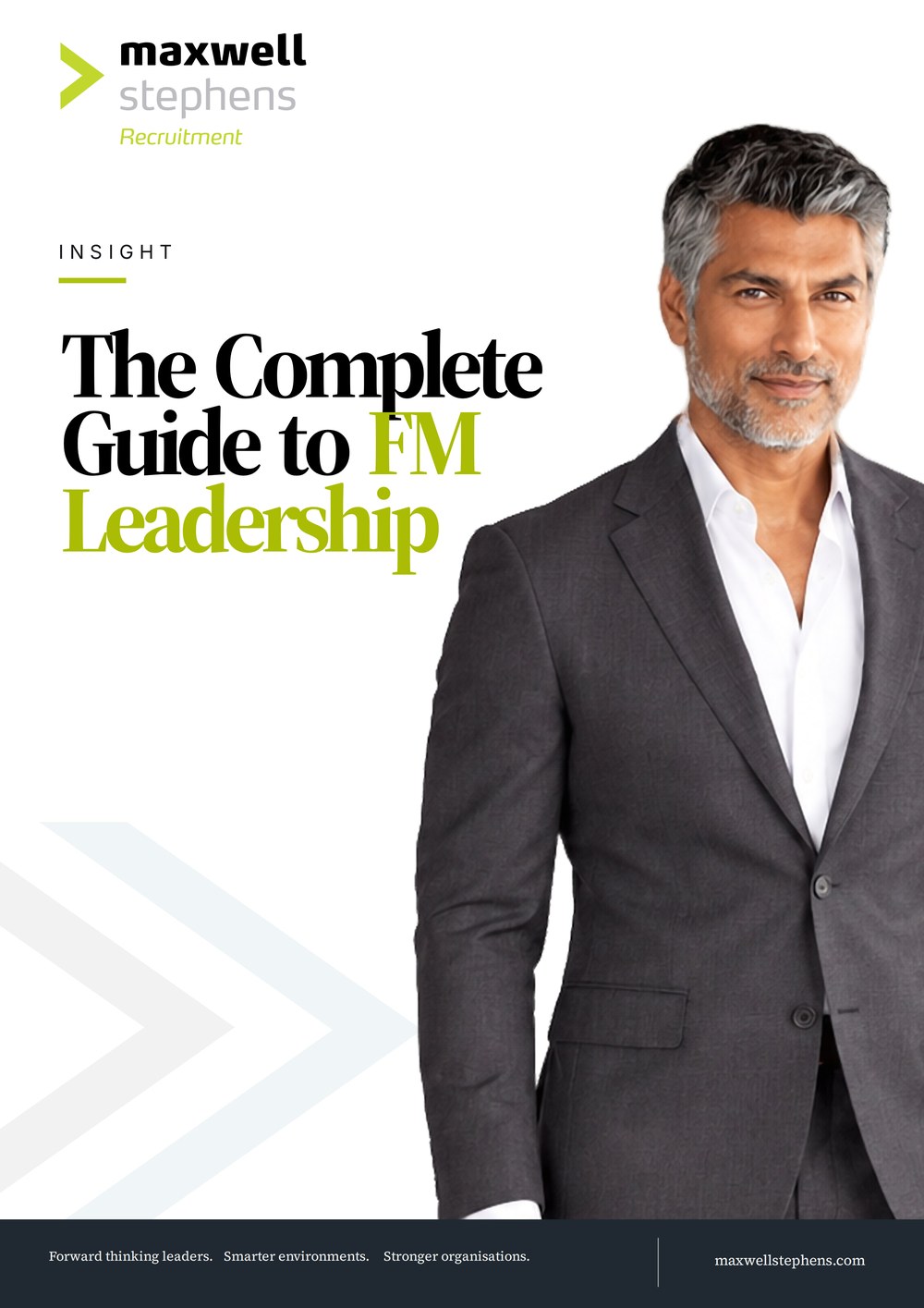
The Complete Guide to FM Leadership brings together the core behaviours, capabilities and mindsets required to lead effectively in modern Facilities Management. It explores how exceptional FM leaders create confidence, reduce uncertainty, improve organisational stability and influence wider business performance.
The guide begins by distinguishing management from leadership. Management is often centred on process, execution, compliance, coordination and control, while leadership involves direction, judgement, influence, trust, communication and clarity during uncertainty. The strongest FM professionals combine both.
Leadership mindset is another central theme. Strong FM leaders think beyond reactive firefighting, short-term tasks and operational noise. They consider business impact, organisational risk, stakeholder perception and long-term outcomes while remaining firmly grounded in operational realities.
The guide places particular emphasis on calm leadership under pressure. Facilities Management regularly involves unpredictability, urgent decisions, operational disruption, competing priorities and stakeholder tension. Exceptional leaders remain composed, measured, clear-thinking and emotionally controlled, creating stability that ultimately builds trust.
Pressure is described as one of the clearest tests of leadership quality. When systems fail, deadlines tighten or uncertainty rises, strong FM leaders do not amplify panic. They reduce it by introducing clarity, structure and confidence.
Decision-making is another defining capability. FM leaders make choices that can affect operations, commercial outcomes, safety, reputation, culture and business continuity. Strong leaders assess situations quickly, prioritise effectively, manage risk calmly and avoid decision paralysis.
The guide also explores the balance between speed and judgement. Poor leadership can sit at either extreme: acting impulsively or delaying decisions through excessive analysis. Strong FM leaders balance urgency, commercial awareness, operational understanding and emotional control, knowing when to move quickly, pause, escalate or simplify.
Influence is presented as a core modern FM leadership skill. Facilities leaders frequently work across senior executives, outsourced providers, contractors, operational teams and cross-functional departments. Their ability to influence therefore depends increasingly on credibility, consistency, communication, Emotional Intelligence and trust rather than hierarchy alone.
Organisational visibility is also increasingly important. The guide explains that FM now contributes to executive discussions, workplace strategy, ESG, employee experience and business continuity. Strong leaders position Facilities Management not simply as operational support, but as strategic business infrastructure.
Trust, consistency and communication form another major section of the guide. Trust is built through repeated behaviour, while leadership consistency helps create psychological safety and organisational confidence. Strong communication further strengthens stakeholder trust, team morale and operational stability.
The guide also examines the need to lead through uncertainty. Hybrid working, ESG requirements, rising operational costs, workplace transformation, supplier complexity, talent shortages and growing stakeholder expectations mean modern FM leaders must operate effectively without waiting for perfect clarity.
Emotional Intelligence is highlighted as an increasingly important differentiator at senior level. Self-awareness, empathy, listening, communication, emotional control and relationship management all contribute to more effective leadership in people-intensive FM environments.
Further chapters examine crisis visibility, workplace strategy, sustainability, wellbeing, employee experience, self-development and leadership confidence. The guide ultimately presents exceptional FM leadership as a combination of operational competence, Emotional Intelligence, business awareness and leadership maturity.
Designed for current and aspiring FM leaders, this resource provides a comprehensive overview of the mindset, judgement and behaviours needed to lead modern Facilities Management functions successfully.
What the data says
The evidence behind this guide: what UK research shows about manager effectiveness, trust in senior leaders and leadership capability gaps.
- Only 27% of UK workers describe their manager as 'highly effective'. Source: Chartered Management Institute (CMI), New study: Bad managers and toxic work culture causing one in three staff to walk, 2023
- Half of employees in large UK organisations (500+ staff) do not trust their CEO or senior leaders. Source: Institute of Internal Communication (with Ipsos Karian and Box), IC Index 2026
- 52% of UK managers do not hold any management and leadership qualifications. Source: Chartered Management Institute (CMI), Better Management Report: Take Responsibility, Take Action, 2023
- Global manager engagement fell by five points in a single year, from 27% to 22%, between 2024 and 2025. Source: Gallup, State of the Global Workplace 2026
- 16% of the FM vacancies Maxwell Stephens advertised from 2023 to 2026 were Head of or Director-level leadership roles. Source: Maxwell Stephens analysis of 497 advertised vacancies, May 2023 to September 2026
See it in practice
Head of Facilities Recruitment for Jupiter Asset Management
Jupiter Asset Management appointed Maxwell Stephens to recruit a Head of Facilities responsible for its London headquarters and strategic oversight of its global office portfolio. We built a candidate profile reflecting both the technical requirements and the leadership qualities needed, then ran a targeted executive search. The appointee established consistent standards across international offices, strengthened compliance and enhanced workplace operations and employee experience. It illustrates the blend of strategy, governance and people leadership that senior FM roles now demand.
Read the full case study or browse all case studies.
Related reading
- What Does Strong FM Leadership Look Like?
- 3 Key Aspects of Leadership
- Why Communication Is a Core Leadership Skill in FM
Practical guides
Free Maxwell Stephens guides on the same subject:
Who this resource is for
Facilities Managers, Heads of Facilities, FM Directors, Workplace and Estates leaders, Property professionals, operational managers, senior business leaders and organisations seeking to develop, assess or recruit high-performing Facilities Management leadership.
Talk to Maxwell Stephens
Maxwell Stephens is a specialist Facilities Management recruitment consultancy. If you are planning an FM, estates or workplace appointment, contact us for a confidential conversation, or read our case studies to see how comparable searches were run.