
Experienced FM professionals are harder to find because the role has grown faster than the talent pipeline, many senior people are nearing retirement, and the strongest candidates are already employed and not applying. This guide explains these pressures, what candidates now look for beyond salary, and how faster, relationship-led hiring and better retention help employers compete.
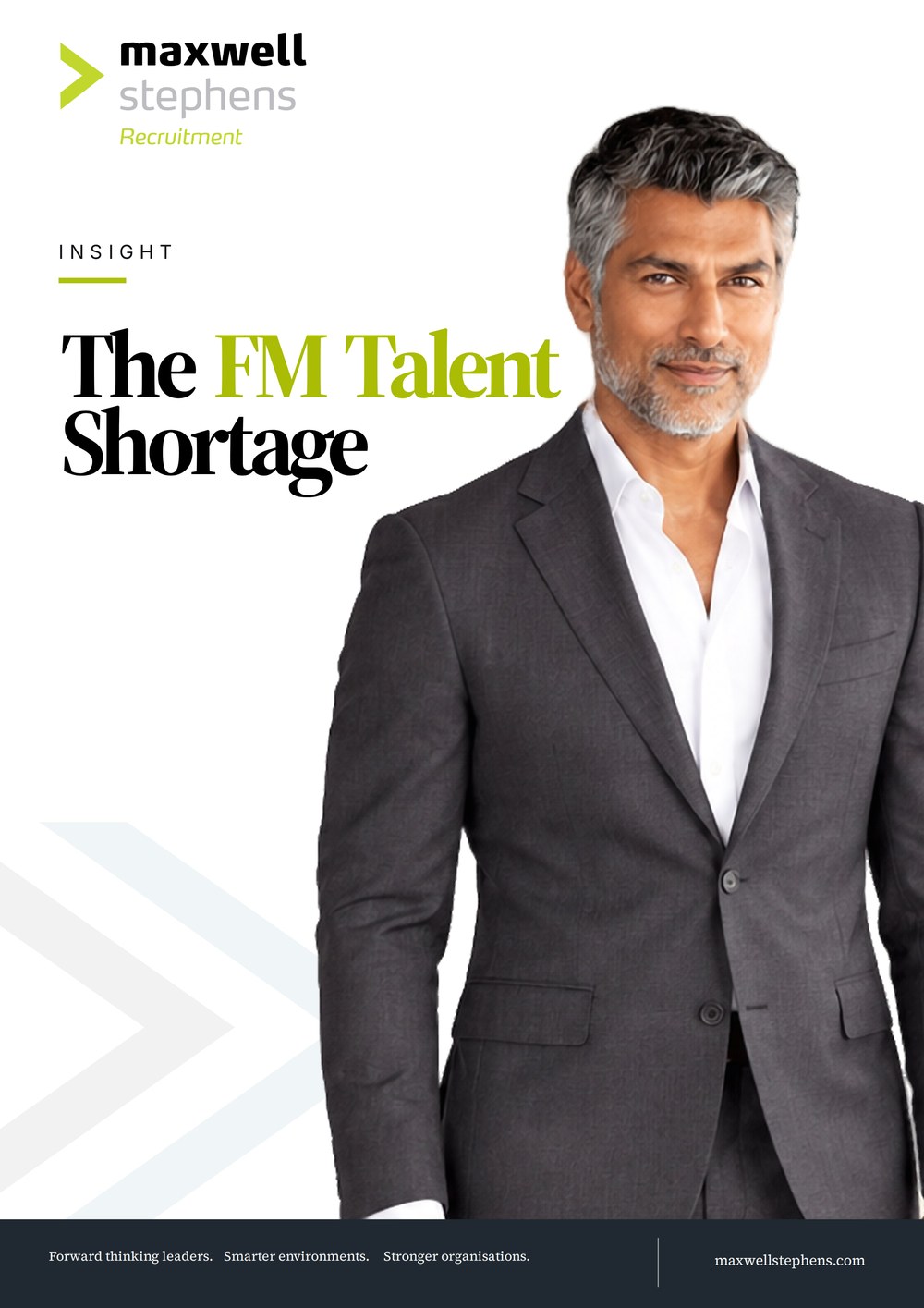
The Facilities Management recruitment market is becoming increasingly competitive. Organisations across the UK are finding it harder to secure experienced professionals with the operational expertise, leadership maturity and strategic capability required by modern FM roles.
The FM Talent Shortage explores the long-term changes behind this increasingly difficult market. The guide explains that Facilities Management has evolved beyond traditional operational delivery. Senior FM leaders are now expected to influence workplace strategy, employee experience, ESG, operational resilience, transformation and executive decision-making.
As expectations increase, employers are competing for a relatively limited group of professionals who combine technical and operational depth with commercial awareness, stakeholder management and leadership capability. The talent pipeline has not developed at the same speed as the profession itself.
The guide also examines the succession pressure created by an ageing leadership population. Many experienced FM professionals are approaching retirement, reducing their responsibilities or becoming more selective about future roles. At the same time, leadership pipelines beneath senior positions often remain underdeveloped, making operational knowledge and maturity increasingly difficult to replace.
Experience is becoming more valuable as operational environments become more complex. Effective FM leaders often develop their judgement through years of crisis management, supplier relationships, stakeholder engagement and leadership under pressure: capabilities that cannot be created immediately.
A central theme is the growth of the passive-candidate market. Many of the strongest FM professionals are already employed, well regarded and stable in their current organisations. Traditional advertising alone is therefore becoming less effective, particularly for senior appointments. Access increasingly depends on trusted relationships, referrals, reputation and long-term market credibility.
Readers will also learn how candidate expectations have changed. Experienced professionals now evaluate leadership quality, organisational culture, operational stability, flexibility, progression and trust, not salary alone. Employers are being assessed just as carefully as candidates throughout the recruitment process.
Further chapters explore retention, employer differentiation, recruitment speed, candidate experience, leadership quality, FM career visibility, ESG and technology skills, and relationship-led recruitment. The guide shows that slow, bureaucratic or unclear hiring processes can cause strong candidates to disengage, while decisive employers with a compelling proposition are better positioned to compete.
Designed for employers, FM leaders and talent teams, this resource provides a strategic overview of the market forces shaping Facilities Management recruitment and the practical steps organisations can take to strengthen attraction, hiring and retention.
What the data says
The scale of the FM talent shortage: what sector and national data show about staff shortages, skilled trades and labour supply.
- 51% of organisations surveyed by SFG20 in 2026 reported a shortage of FM staff. Source: SFG20 State of FM survey, reported by TWinFM, 2026
- 93% of UK employers have faced skills shortages in the last 12 months, according to Hays' 2026 salary guide. Source: Hays UK Salary & Recruiting Trends 2026
- Skilled trades had the highest skill-shortage vacancy density in 2024: 48% of UK skilled trades vacancies were hard to fill due to a lack of skills among applicants. Source: Department for Education, Employer Skills Survey, Calendar year 2024, 2025
- Almost two thirds (62%) of FM professionals surveyed by IWFM in 2023 cited access to EU workers as a negative impact on the sector. Source: IWFM, Market Outlook 2023 research: how EDI measures can help the FM skills crisis
- Maxwell Stephens has a network of more than 50,000 FM professionals across the UK and Europe. Source: Maxwell Stephens, 2026
See it in practice
Recruiting Engineering Leadership for the Royal Household
The Royal Household's Property Section appointed Maxwell Stephens to recruit two specialist engineers: a Senior Operations Engineer for Windsor Castle and an Operations Engineer for Buckingham Palace. Because engineers with this profile are rarely on the market, advertising alone would not reach them, so we ran an executive search targeting heritage, critical infrastructure and complex M&E experience, assessing both technical and behavioural requirements. A clear example of a scarce technical skill set that needed direct search, not advertising, to reach.
Read the full case study or browse all case studies.
Related reading
- Why Good Facilities Managers Are Hard to Recruit
- How Apprenticeships Are Closing the FM Skills Gap
- What the IWFM Market Intelligence Report Reveals About FM’s People Challenge
Practical guides
Free Maxwell Stephens guides on the same subject:
Who this resource is for
Facilities and Workplace leaders, HR professionals, talent acquisition teams, senior hiring managers, business leaders and organisations seeking to attract, retain and develop experienced Facilities Management professionals.
Talk to Maxwell Stephens
Maxwell Stephens is a specialist Facilities Management recruitment consultancy. If you are planning an FM, estates or workplace appointment, contact us for a confidential conversation, or read our case studies to see how comparable searches were run.