
Great hiring decisions depend on recognising the human psychology behind them: polished candidates can be overrated, urgency distorts judgement and too much process causes decision fatigue. This guide explains how organisational clarity, stakeholder trust and self-awareness lead to better FM hires, and why interviews should be combined with behavioural assessment, references and experienced judgement.
Recruitment is often approached as a process: define the role, review CVs, conduct interviews, complete assessments and secure approval. But beneath every hiring decision sits something far more complex: human judgement.
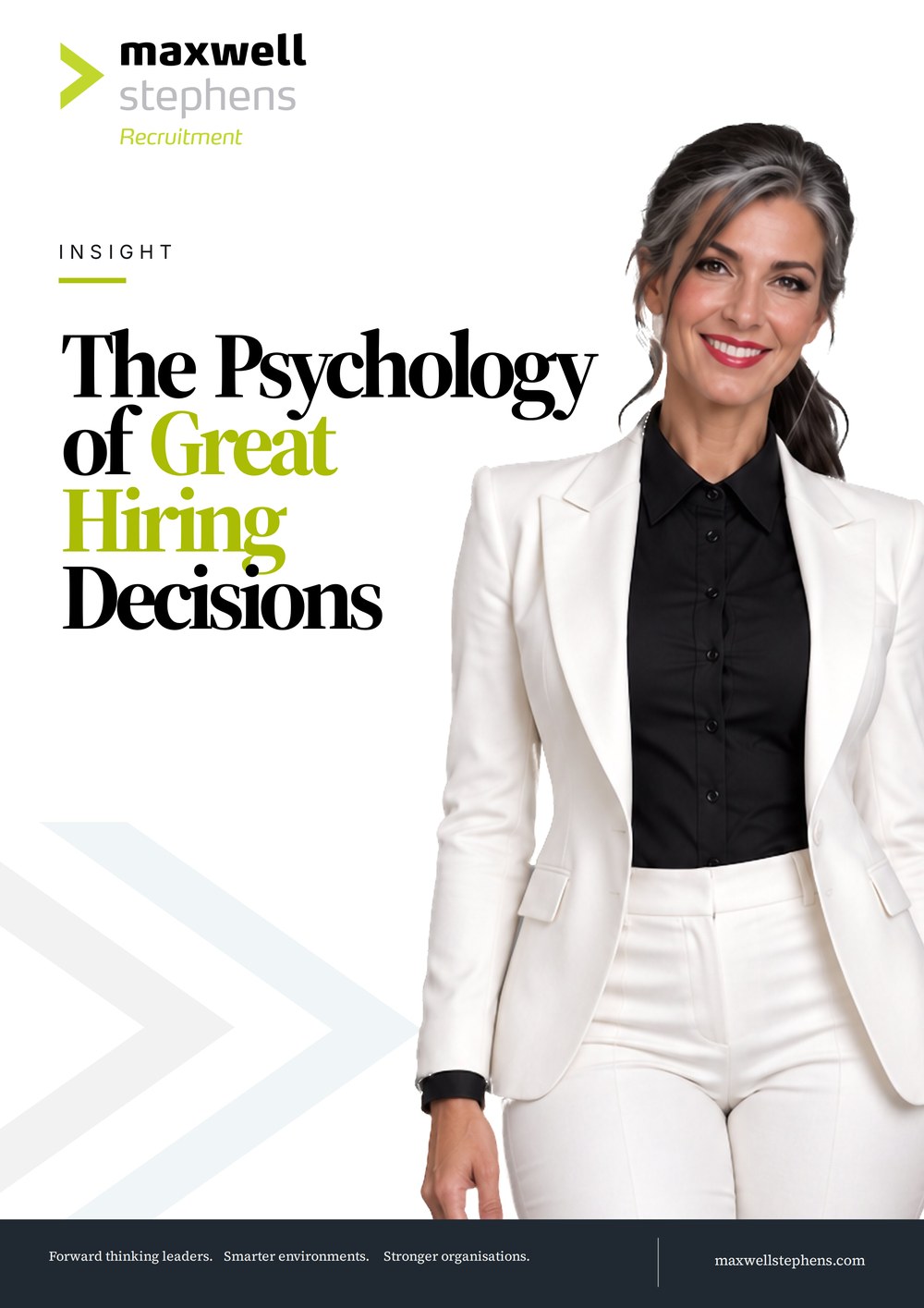
The Psychology of Great Hiring Decisions explores the behavioural, emotional and psychological factors that influence recruitment decisions in Facilities Management. It asks employers to look beyond whether someone can perform the technical requirements of a role and consider whether they can perform under pressure, strengthen the culture, build trust and succeed within the organisation over the long term.
The guide begins by examining why hiring decisions are often more emotional than organisations realise. Confidence, communication style, familiarity, charisma, calmness and emotional energy can influence interviewer perception. This creates a risk that polished candidates may be rated more highly simply because they interview well, while quieter but highly capable professionals are underestimated.
Pressure can distort judgement further. Resignations, stretched teams, delayed projects and operational gaps create urgency, increasing the risk of reactive hiring, emotional decision-making, overcompensation or excessive caution. The guide argues that stronger decisions require calmness, clarity and structured thinking rather than emotional urgency.
Organisational clarity is another central theme. The strongest hiring processes tend to feel comparatively calm because stakeholders understand the role, agree on the requirements and trust the decision-making framework. Chaotic recruitment may indicate poor role definition, internal uncertainty or fragmented leadership alignment.
The guide also presents recruitment as a reflection of leadership psychology. Confused hiring can reveal weak communication, fear-driven decision-making or lack of alignment, while stronger organisations demonstrate decisiveness, consistency and role clarity.
Recruitment complexity is examined critically. Additional interviews, assessments, approvals and stakeholder involvement may initially be introduced to reduce risk, but excessive process can create decision fatigue, slower hiring, candidate disengagement and weaker judgement.
Readers will also learn why organisational self-awareness is fundamental. Employers need a realistic understanding of their culture, leadership style, operational realities, stakeholder dynamics and team behaviour. Without it, hiring decisions can become based on generic competencies or idealised descriptions that do not reflect how the organisation actually operates.
Trust is another important theme. High-trust recruitment environments involving aligned stakeholders, leadership teams, recruiters and candidates tend to move more clearly and confidently. Low-trust environments are more likely to produce over-analysis, indecision and fragmented decision-making.
The guide also challenges excessive reliance on interviews. Interviews can reveal communication, presentation, behavioural indicators and interpersonal dynamics, but they may provide less insight into long-term consistency, resilience, emotional maturity and leadership under sustained operational pressure. Stronger hiring decisions therefore combine interviews with behavioural assessment, references, contextual understanding and experienced judgement.
Further sections explore Emotional Intelligence, decision fatigue, cultural contribution, long-term thinking, candidate psychology and stakeholder alignment. The resource ultimately positions hiring as a strategic leadership capability with direct consequences for culture, resilience, performance, retention and organisational stability.
What the data says
What the evidence says about hiring judgement: measuring quality of hire, growing interview loads and how often employers get appointments wrong.
- Only 25% of talent acquisition professionals globally feel highly confident in their organisation's ability to measure quality of hire. Source: LinkedIn, The Future of Recruiting 2025
- UK applications submitted are up 16% and interviews needed to land a single role are up 18%, Totaljobs found in 2026. Source: Totaljobs Hiring Trends Update, 2026
- 85% of UK HR decision-makers admit their organisation has made a bad hire; a third believe these mistakes cost nothing. Source: Recruitment & Employment Confederation (REC), Hiring mistakes are costing UK businesses billions each year, 2017
- 90% of UK organisations use some form of selection interview; 52% use competency-based interviews. Source: CIPD, Resourcing and talent planning report 2024
- 95% of candidates placed by Maxwell Stephens remain in role one year after appointment. Source: Maxwell Stephens, 2026
See it in practice
Property Manager Recruitment for Stewart Investors
When Stewart Investors needed to replace an Office Manager who had been with the business for 17 years, it appointed Maxwell Stephens to recruit a Property Manager for its Edinburgh headquarters. Through detailed consultation meetings, we defined what success would look like, then searched for technical capability alongside initiative, emotional intelligence and adaptability suited to a collaborative, low-hierarchy culture. Replacing a long-serving employee tests hiring judgement; defining future success clearly guards against simply seeking a copy of the incumbent.
Read the full case study or browse all case studies.
Related reading
- How to Identify and Reduce Recruitment Bias
- How to Identify the Intangible Skills That Make a Great Candidate
- Why Soft Skills Matter When Hiring the Right Candidate
Practical guides
Free Maxwell Stephens guides on the same subject:
Who this resource is for
Facilities and Workplace leaders, HR professionals, talent acquisition teams, senior hiring managers, operational directors and organisations recruiting Facilities Managers, Heads of Facilities, Workplace leaders, Estates professionals and FM Directors.
Talk to Maxwell Stephens
Maxwell Stephens is a specialist Facilities Management recruitment consultancy. If you are planning an FM, estates or workplace appointment, contact us for a confidential conversation, or read our case studies to see how comparable searches were run.