
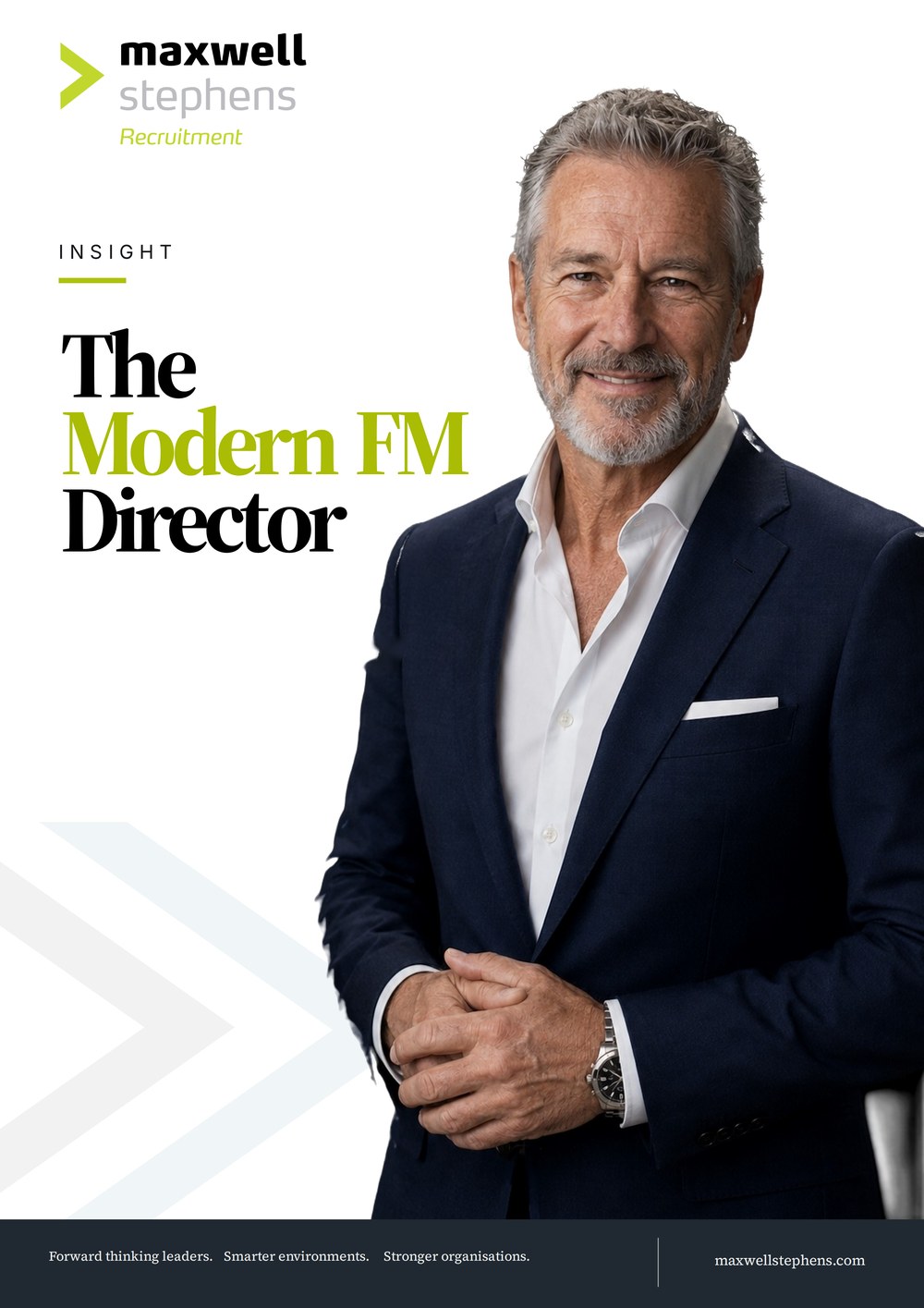
The modern FM Director is a business leader, not just the head of maintenance and services, working across strategy, workplace experience, ESG, technology, resilience and transformation. This guide explains the skills the role now needs, including commercial awareness, executive communication, data literacy and calm leadership, and why FM Directors increasingly act as strategic advisers to boards.
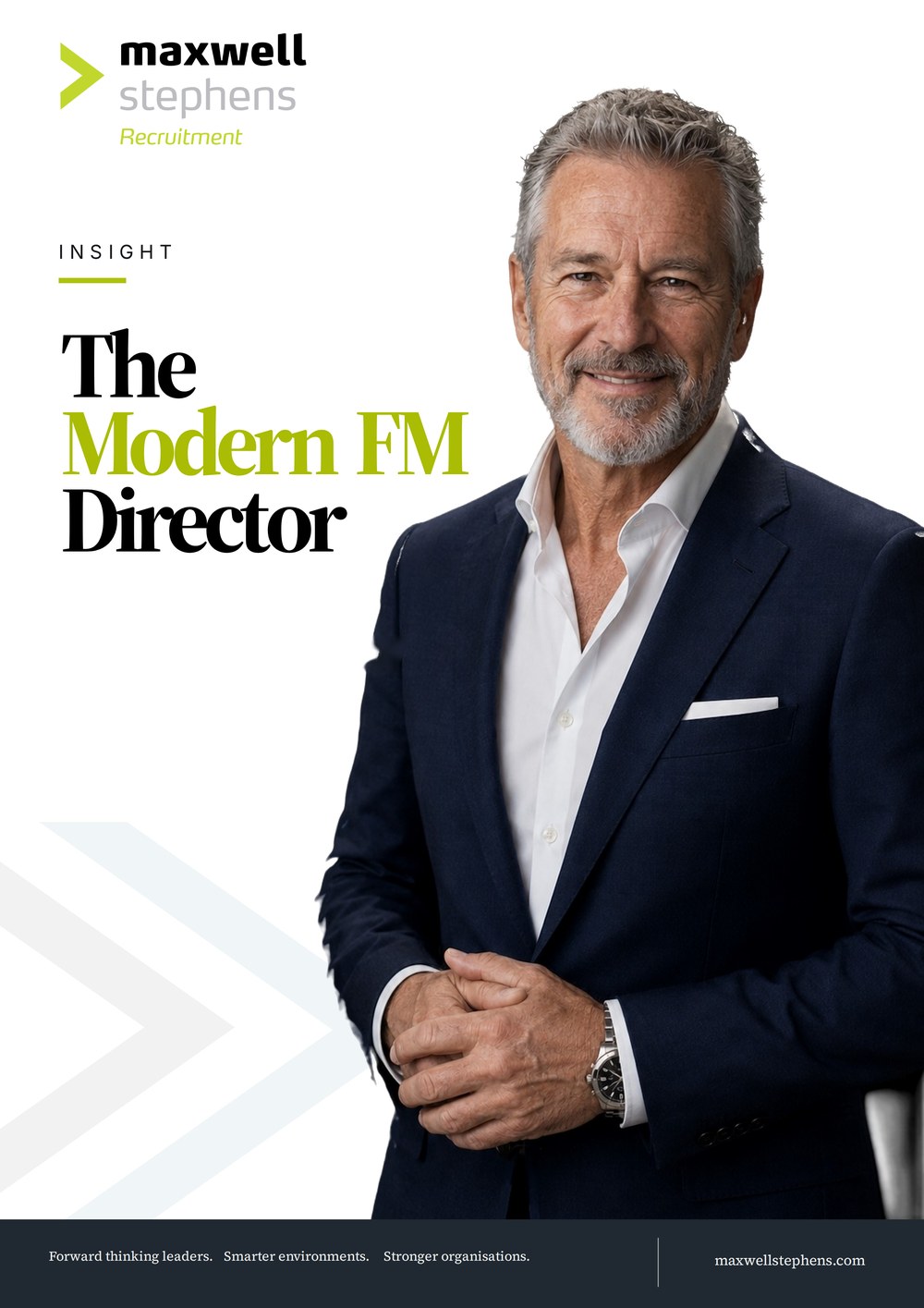
The role of the Facilities Management Director has changed significantly. While maintenance, service delivery, compliance, contractors and building operations remain fundamental responsibilities, modern organisations increasingly expect senior FM leaders to contribute at a much more strategic level.
The Modern FM Director explores this transformation and the capabilities now required to lead contemporary Facilities Management functions. Today’s FM Directors increasingly operate across operations, workplace strategy, employee experience, ESG, technology, organisational resilience and business transformation.
The guide explains why Facilities Management has become more strategically important. Workplace environments influence productivity, engagement, retention, wellbeing, collaboration, culture and the overall employee experience, placing FM at the centre of wider organisational performance.
Readers will learn why modern FM Directors must increasingly think like business leaders. Senior FM professionals are expected to understand business priorities, financial performance, operational risk, organisational strategy and executive decision-making, connecting operational excellence directly to commercial and organisational value.
Executive communication has also become critical. Effective FM Directors must communicate confidently with executives, boards, investors and senior stakeholders. This requires an ability to simplify complex information, present operational risks clearly and influence organisational decision-making.
The guide also explores FM’s growing board-level influence. Workplace strategy, ESG, sustainability, operational resilience, employee experience and business continuity are increasingly discussed at senior level, requiring FM Directors to act as strategic advisers rather than simply operational reporters.
Further chapters examine the move from reactive to strategic Facilities Management. Long-term planning, workplace optimisation, transformation, forecasting, data analysis and commercial awareness help leaders anticipate problems and prepare organisations before disruption occurs.
Workplace experience is another major theme. Hybrid working has increased the importance of workplace design, office utilisation, hospitality, employee wellbeing and creating environments that attract people, encourage collaboration and reinforce culture. The guide describes this as a shift towards active stewardship of the human experience at work.
The resource also explores ESG, sustainability, smart buildings, automation, predictive maintenance, AI reporting and operational data. Modern FM Directors increasingly need technological understanding, data literacy and digital confidence alongside traditional operational expertise.
Transformation leadership, calmness under pressure, stakeholder management, organisational culture, commercial awareness and leadership visibility are also examined, presenting the modern FM Director as a multifaceted business leader capable of balancing operational excellence with strategic influence.
What the data says
The data behind the changing FM Director role: hybrid working among senior leaders, board-level risk, energy efficiency regulation and AI adoption.
- Close to half (45%) of managers, directors and senior officials in Great Britain followed a hybrid working model in April to June 2024. Source: Office for National Statistics, Who are the hybrid workers?, 2024
- Just 27% of UK businesses have board members taking explicit responsibility for cyber security. Source: GOV.UK (DSIT / Home Office), Cyber security breaches survey 2025
- From 2031, the Government proposes that privately rented non-domestic buildings over 1,000 m² in England and Wales must reach EPC B, where cost effective. Source: GOV.UK (Department for Energy Security and Net Zero), Minimum Energy Efficiency Standards (MEES) in the non-domestic Private Rented Sector: interim response, 2026
- 28% of organisations worldwide have embedded AI in their FM operations, rising to 46% for organisations with 100,000+ employees. Source: JLL, Global State of Facilities Management Report 2025
- For 12 permanent director-level FM and estates roles Maxwell Stephens advertised from 2023 to 2026, the median top-of-range salary was £93,000. Source: Maxwell Stephens analysis of 497 advertised vacancies, May 2023 to September 2026
See it in practice
Group Facilities Director Recruitment for Penguin Random House UK
Penguin Random House UK appointed Maxwell Stephens to recruit a Group Facilities Director to lead FM across its UK and Ireland portfolio, including DK London. Assessment went well beyond technical FM, testing senior leadership, multimillion-pound budgets, major projects, business continuity and board-level communication. The appointee brought clearer strategic direction, stronger financial oversight and greater oversight of rent reviews, business rates and lease renewals. It shows the modern FM Director as a strategic, commercially fluent business leader rather than solely a head of operations.
Read the full case study or browse all case studies.
Related reading
- What Makes a Great Facilities Director?
- Adelphine Williams on Helping FM Inform Key Business Decisions
- In-Demand Skills for Modern Facilities Management Professionals
Practical guides
Free Maxwell Stephens guides on the same subject:
Who this resource is for
Facilities Directors, Heads of Facilities, senior FM professionals, Workplace and Estates leaders, Property Directors, HR and talent teams, executive leaders and organisations recruiting or developing senior Facilities Management leadership.
Talk to Maxwell Stephens
Maxwell Stephens is a specialist Facilities Management recruitment consultancy. If you are planning an FM, estates or workplace appointment, contact us for a confidential conversation, or read our case studies to see how comparable searches were run.